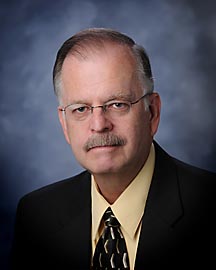
His government career began when he was drafted in 1968. Dennis joined the
Air Force prior to call-up and spent over three years on active duty and an
additional seven years with the Air National Guard. He was hired by the
Department of Defense (DOD) to maintain aircraft avionics systems after leaving
the service and eventually landed an electronics technician position with the
Federal Aviation Administration (FAA) in 1975. He spent the remainder of his
career in various positions with the FAA.
During his time with the FAA, Dennis worked on staff in various positions
including training instructor, project engineer, computer based instruction
(CBI) administrator, training program manager and program support manager. The
last 20 years included numerous supervisory and management positions where he
was responsible for recruiting, rating and interviewing applicants, outreach,
and hiring for his organization. His last position was technical operations
manager at the Greater Pittsburgh International Airport’s air traffic control
tower. Dennis based this site and his new book on his 35 years of personal
government experience.
Parts of this journal may
relate to your personal situation. If you would like to comment on a journal
entry or suggest a topic of interest send an e-mail to
ddamp@aol.com.
Readers should seek professional advice
concerning their retirement and benefits and for all other areas that require
professional clarifications and guidance. The author is not a benefits
specialist or financial planner and is only relaying his personal thoughts and
ideas in this forum. Readers are strongly cautioned to consult with a
professional before using any information contained in this forum. No forum can
substitute for professional retirement benefits and planning, investment, or
medical advice. Caution is urged when using the information contained in the
articles that are posted on this site. The authors and publisher are not engaged
in rendering retirement planning, benefits, investment, or medical advice or
services. If you have a retirement planning, benefits, investment problem or
medical concern, you should consult with a qualified professional in that area.
Accordingly, the authors and publisher expressly disclaim any liability, loss,
damage, or injury caused by the contents posted on this forum.
Print This Article & Post it at Your
facility
August 1, 2008
FERS Sick leave Conversion,
Educational Opportunities,
COLAs 6.2% +, Part Time Jobs for Retirees, & Helpful Links
by Dennis V. Damp, Retired FAA
FEATURING:
- FERS Sick Leave Conversion Proposal
- Educational Opportunities - Keep Your Options Open
- 2009 COLA Exceeding 6% and Rising
- Part Time Jobs - Lucrative Retiree Options
- Helpful Links
FERS Sick Leave Conversion (Proposed)
Potential good news for FERS employees. Two proposals by Representatives
Henry Waxman, under
H.R. 1108
and James Moran, offer two alternatives for retirement sick leave
conversion. One proposal would offer a credit of 75% of accrued sick leave
and another provides a payment of up to $10,0000 for unused sick leave when
you retire. There are many obstacles remaining and nothing is certain yet.
Stay tuned for more on this subject. You can review the house bill for
particulars or read
Government Executive’s article on this subject.
Educational Opportunities
Many federal employees and retirees explore completing college degrees
they started years ago or look into taking credit or non-credit courses for
subjects of interest when they retire. I participated in educational
Extension Programs during my career to earn college credits through
correspondence programs long before the Internet was conceived. Today it’s
much easier and there are many online options available to complete degrees
or gain new skills and credentials for other jobs and your retirement
pursuits and goals. We recently launched a comprehensive
Educational Program Research Center that you can use to explore online
educational opportunities for all areas. This site can be easily searched
for available degree or certificate programs or to simply identify courses
of interest. Explore our new
Education
Center for available options.
COLAs
As Jackie Gleason would say, “How sweet it is.” Yes, for the first time
in many years it is possible that the Cost of Living Adjustment (COLA) will
exceed 7%, now at 6.2% with time remaining for additional increases. For
more on how COLAs are calculated go to
http://federalretirement.net/benefits.htm#COLAs.
Part Time Jobs for Retirees
The U.S. Census Bureau hired over 960,000 part time workers during the
2000 census and anticipates hiring 1.3 million for the upcoming 2010 census.
In 2000, many federal retirees were hired for the census and the restriction
on their earnings was waived, including retirees who received buy outs.
There is a good chance that the restrictions will be waived again for the
2010 census. 100,000 workers will be hired for Address Canvassing, which
begins next March and April. Peak hiring will be from February 2009 through
the end of May 2010 for temporary assignments, most lasting 5 to 10 weeks.
Most positions require U.S. citizenship, a driver’s license and use of a
vehicle, and each applicant will undergo a background check. 2010 Census
positions offer competitive wages and flexible schedules. Visit the census
web site at
http://www.census.gov/hrd/www/jobs/fo.html to check for opportunities. I
was advised that some positions will be hired as early as next month to set
up local offices. Check that a waiver for
rehired federal
annuitants has been approved before accepting a position.
We recently launched two new online job listing boards for
Health Care Jobs and
Environmental health & Safety
Jobs. We are expanding this job posting data base service to our
retirement planning site early next year. Federal retirees in these
occupations will find a variety of work options including part time,
contractor, and full time positions. Retirees and active feds with security
clearances will also find lucrative job opportunities at our
Clearance Jobs Center.
Helpful Links:
Visit our other informative
sites
http://federaljobs.net (Federal Career & Job Center)
http://federalretirement.net (FREE Retirement Planning
Guide)
http://fedcareer.info
(Career Development Center)
http://healthcarejobs.org
(Health Care Career & Jobs Center)
http://postofficejobs.info
(Postal Career Center)
http://ehsjobs.org
(Environmental Health & Safety Job Center)
Send comments to ddamp@aol.com
FDIC Coverage - How to Protect
Your Ass..ets, COLAs, &
Retiree Jobs Update
Print This Article & Post it at Your
facility
by Dennis V. Damp, Retired FAA
FEATURING:
- FDIC Coverage - How to
Protect Your Ass..ets.
- COLA’s - Heading for the
Stratosphere
- Retiree Job Opportunities
- Jobs in Media
FDIC Coverage
With the recent IndyMac bank failure, and possibly more to come, retirees
are understandably worried about their bank deposits and Federal Deposit
Insurance Coverage (FDIC). All of the major news networks covered this
subject recently and I believe much of that coverage was misleading and left
viewers ill advised about the scope of their FDIC coverage.
Most understand that FDIC insured banks cover up to $100,000 that you have
deposited in checking, savings, and NOW accounts, certificates of deposit
(CDs), money market deposit bank accounts, and $250,000 in IRA retirement
accounts in any one bank per depositor. What most don’t realize is that FDIC
insurance coverage expands substantially above the $100,000 limit for
special kinds of accounts or ownership categories. The key to expanding your
coverage in one bank is to register your accounts differently and by
establishing formal or informal revocable trust
account designations when appropriate. Designating bank accounts (ITF) In
Trust for or (POD) Pay on Death also allows you to avoid probate when
settling an estate. You can also open accounts in other banks and receive
the same FDIC protection. For example, if you have $100,000 each in two
different FDIC insured banks you are covered for up to $200,000 if both
banks fail.
The FDIC guide located online at
http://www.fdic.gov/deposit/deposits/insured/yid.pdf shows an example of
POD accounts with multiple owners and beneficiaries on page 13 that provides
$1,000,000 in FDIC coverage at one bank.
One news report stated that the FDIC doesn’t cover safe deposit box
contents and that is correct. The FDIC only covers deposit accounts.
However, they failed to explain that in the event of a bank failure, in most
cases an acquiring institution would take over the failed bank's offices,
including locations with safe deposit boxes. If no acquirer can be found the
FDIC would send boxholders instructions for removing the contents of their
boxes. The FDIC advises safety box holders to read the contract you signed
with the bank when you rented the safe deposit box in the event that some
type of insurance is provided; some banks may make a very limited payment if
the box or contents are damaged or destroyed, depending on the
circumstances. If you are concerned about the safety, or replacement, of
items you have put in a safe deposit box, you may wish to consider
purchasing fire and theft insurance. Usually such insurance is part of a
homeowner's or tenant's insurance policy for a residence and its contents.
Again, consult your insurance agent for more information.
Use the following checklist and resources to confirm your banks coverage and
to calculate your actual FDIC coverage at each bank that you have funds
deposited. I used all of these resources recently and found them to be easy
to use and very helpful. The Electronic
Deposit Insurance Estimator (EDIE) Calculator allows you to enter all of
your account information and registrations to show you exactly what is and
isn’t covered at your bank. A great tool.
The FDIC does NOT insure stocks, bank brokerage accounts, mutual funds
including mutual fund money market accounts or other non-deposit
investments. The FDIC only covers the deposit accounts listed earlier in
this article. However, the Securities Investors Protection Corporation (SIPC),
a non government entity, replaces missing stocks and other securities in
customer accounts held by its members up to $500,000, including up to
$100,000 in cash, if a member brokerage or bank brokerage subsidiary fails.
For more information contact www.SIPC.org.
FDIC Check List:
¨ Determine if your bank is FDIC
insured: Go to
Bank Find
¨ Use the
EDIE Calculator to determine
your total FDIC coverage
¨ Read the
FDIC
Guide for complete information
¨ Research ITF and
POD account designations to expand coverage
¨ If deposits exceed your coverage at one
bank open accounts at other FDIC insured banks.
(Each bank is insured separately)
¨ For non-deposit investment accounts such
as brokerage accounts contact www.SIPC.org.
COLA Update
The 2009 Cost-of-Living Adjustment (COLA) for federal retirees could
possibly exceed 6%. The CPI adjustment through June is 5.7% and we still
have three months to go. If inflations goes down, which I doubt, that could
change things. This COLA could be the largest since 1982 when retirees
received an 8.7 percent increase. My annuity has increase just over 10%
since I retired January 1, 2005. For more information on COLAs read my
July column.
Federal Retiree Job Opportunities - I recently discovered an excellent
resource for federal retirees to locate media jobs. Many feds retire at 55
or younger today and often seek part time or full time employment to
supplement their income or to explore other venues of interest. Yes, even
Uncle Sam has media specialists of all types including public affairs,
technical writers, audiovisual production, theater and arts, editors, and
writers in general. Plus many federal managers and specialists are often
called upon to write detailed reports and proposals and edit others work. If
you are looking for exciting new opportunities in media visit
http://mediabistro.com and explore
their job listings for full time, part time and freelance positions. I
recently interviewed Laurel Touby, the founder and CEO of
www.mediabistro.com, for an article
I’m writing for Publisher’s Marketing Association. This site is an excellent
match for many retired feds looking for the rewards and challenges of
working in media with the private sector. Lots of very interesting job
opportunities to explore. I added this site to our
jobs board on
http://federalretirement.net.
Visit our other informative
sites
http://federaljobs.net (Federal Career & Job Center)
http://federalretirement.net (FREE Retirement Planning
Guide)
http://fedcareer.info
(Career Development Center)
http://healthcarejobs.org
(Health Care Career & Jobs Center)
http://postofficejobs.info
(Postal Career Center)
http://ehsjobs.org
(Environmental Health & Safety Job Center)
Send comments to ddamp@aol.com
July 1, 2008
COLAs, Retirement Time
Line, and Travel Considerations
by Dennis V. Damp, Retired FAA
Print
this PDF file & post it at your facility
FEATURING:
-
New site & Book Review
-
COLA’s - Heading for 5% +
-
Retirement Time Line - Who’s on First & What’s on
Second
-
Travel Considerations - Looking for a Winter Retreat
New Site & Book Review
We moved our retirement planning site to its own unique domain name in
June. The site has grown so much that we needed additional space for the
areas we have expanded into including
jobs postings for
retired feds. The new site is located at
http://federalretirement.net,
bookmark this site for future site visits. We added redirects to all of the
old pages on http://federaljobs.net.
Nancy Holston reviewed
Live Your Road Trip Dream
by Phil and Carol White this month. Book review subjects include finance,
investing, health and exercise, cooking, and everything in between that may
be of interest to YOU. If you discover a helpful book let us know and we
will review it here. I want to thank Nancy for volunteering to review books
for this site and we welcome
others
to participate as well.
COLA’s - Up and Coming!
Cost-of-Living Adjustments (COLAs) are effective each December first. The
adjustment appears in your January annuity payment on the first business day
of the month. The consumer price index (CPI) is up 4.5% so far this year and
it is possible that it will continue to increase providing possibly a 5% or
greater increase with inflation on the rise.
CSRS retirees will receive the full CPI increase in January. With FERS or
FERS Special benefits, if the increase in the CPI is 2 percent or less, the
Cost-of-Living Adjustment is equal to the CPI increase. If the CPI increase
is more than 2 percent but no more than 3 percent, the Cost-of-Living
Adjustment is 2 percent. If the CPI increase is more than 3 percent, the
adjustment is 1 percent less than the CPI increase. The new amount is
rounded down to the next whole dollar.
The good new is that retirees will get a fairly substantial cost of
living benefit increase this year that will more than likely prove larger
than the average active federal employee’s projected 3 to 3.9% increase. The
bad news is that everything from gas to food is costing more these days. To
track the annual COLA increases since 1999 go to
http://federalretirement.net/benefits.htm. My annuity, adding the newest
projected increase of lets say 5%, will have increased in four short years
by 15% this January!
Retiree’s are also losing out on income with Certificates of Deposit (CD)
interest at the lowest it has been in years. Most CDs are paying less than
3% short term up to 4% for 48 months or more. Money market accounts are
earning considerably lessl. I still like inflation protected I-Bonds or
Treasury Inflation Protection Securities (TIPS) that you can buy direct from
the Treasury at http://treasurydirect.gov. I-Bonds are now paying 4.84% and the yield
increases as inflation rises. See my article on the new I-Bond purchase
limits at http://federalretirement.net/Journal/feb2008j.pdf for more information
on this subject.
Retirement Time Line - Who’s on First & What’s on Second
I received a number of emails this month asking about the steps that you
must take the year you plan to retire. I updated my time line on this
subject that is located at
http://federalretirement.net/postretire_journal3.htm. Also go to the
forms page at http://federalretirement.net/retireforms.htm for downloadable forms and
for instructions on completing your SF-1199A Direct Deposit instructions
that you will need for your annuity payment including the address that your
bank must send this to.
Tammy Flanagan also published a
To-Do-List In a recent article that you will find helpful. One thing
that Tammy’s article does not address is your clearance record. You MUST
fill out your agency’s Employee Clearance Record and Security Termination
Statement. On your last day, take your signed clearance record to your
supervisor’s office and turn in any personal items such as computer, cell
phone, pager, credit cards, ID cards, keys, etc. If you neglect to do this
your lump sum leave payment and first estimated annuity check will be
withheld until this is done.
Travel - Looking for a Winter Retreat
I’ve been retired now three and a half years and my wife and I have yet
to spend any appreciable time traveling as we had planned. First, we put it
off because our dog was getting up in years, so we stuck around until she
passed away at age 15, almost 2 years ago. We really don’t have any valid
excuses to put it off so we decided to initiated a plan this month to get us
off the mark and on the road. We are interested in either a beach community,
small town, or inland resort area that is laid back with good restaurants,
shopping, and local attractions. Basically a friendly quiet place if at all
possible.
We are thinking that the Carolinas or possibly somewhere on Florida’s
central to northern Golf Coast would be good for a vacation getaway. The
Carolinas are more attractive because we can drive their in 7 to 12 hours.
With vacation homes selling well below market we are considering purchasing
a condo or home that we can escape to in the winter months. We know little
about the Carolinas or Florida so I contacted Phil and Carol White, authors
of Live Your
Road Trip Dream that we reviewed this month on our Book
Review page, http://federalretirement.net/reviews.htm. Carol and Phil suggested a
number of places for us to explore and we put them on our itinerary. We also
contacted Stan and Sandra Phillips-Posner, author’s of
Drive I-95.
Randy Baldwin, a friend and federal retiree living in North Carolina, also
gave me several recommendations.
Hopefully, even with gas prices through the roof, we will find a great
place to escape to this year. If anyone has a suggestion or two about a
great place they found enjoyable drop me a line at
ddamp@aol.com. I would like to hear from
you. I’ll post any input I receive on this site so others can take a look.
Visit our other informative sites
http://federaljobs.net (Federal Career & Job
Center)
http://federalretirement.net
(FREE Retirement Planning Guide)
http://fedcareer.info (Career
Development Center)
http://healthcarejobs.org (Health
Care Career & Jobs Center)
http://postofficejobs.info (Postal
Career Center)
http://ehsjobs.org (Environmental Health &
Safety Job Center)
Send comments to ddamp@aol.com
The ROTH IRA Switch! TSP Thoughts,
& The 2008 Election
by Dennis V. Damp, Retired FAA
Print This Article & Post it at Your
facility
FEATURING:
-
The Roth IRA Switch!
-
TSP Thoughts
- Annual Statement & Gains
Commentary - The 2008 Election
The Roth IRA Switch!
Retirees may discover that shifting some or all of their THRIFT
savings or traditional IRAs into a ROTH will save them taxes on investment
earnings and growth long term. A good idea in many cases. Roth IRAs provide
tax-free earnings on your contributions however you MUST pay taxes on
your initial ROTH contributions. The amount that you transfer into a ROTH is
fully taxed at current tax rates. Since you already paid taxes on your
contributions you can withdraw them from a Roth IRA at any time tax-free.
Generally, if your account has been open for at least 5 years, your earnings
are tax-free when you withdraw them. Usually, you must be 59½ or older in order
to avoid paying a 10% early withdrawal penalty tax on your earnings.
Other exceptions to the withdrawal penalty tax may also apply.
IRS publication 590
provides detailed guidance.
Roth IRAs do not require minimum distributions for participants
starting at age 70½ like traditional IRAs require and beneficiaries pay NO
INCOME TAXES for inherited accounts open at least five years. ROTH IRAs are
one of the few investment vehicles that we have, other than municipal bonds,
that earn tax free income.
The 2008 income limits are $116,000 for an individual and
$169,000 for a married couple filing jointly. These income limits are eliminated
in the year 2010. At that time anyone, regardless of income, can convert their
THRIFT and IRAs to a ROTH. Thanks to the 2006 Pension Protection Act, if you
convert to a ROTH in 2010 you are permitted to pay the taxes over a two year
period, half in 2011 and the remaining half in 2012, a great deal for all. Uncle
Sam receives a windfall in 401K taxes that they wouldn’t normally receive for
decades and those who convert will earn tax free gains on their investments and
get to defer the tax burden over a three year period, 2010 through 2012.
Retirees that are working and earning income under the limits,
most federal retirees, can open and contribute to a ROTH. Contributions limits
for 2008 are the lessor of $5,000 or your taxable compensation for the year. If
you are over 50 the limit increases to $6,000.
Additional Resources:
ROTH Conversion Questions & Answers -
http://federaljobs.net/retire/benefits.htm You will also find links to
informative articles on this subject following the Q&As.
TSP Web Site - http://tsp.gov
http://tsp.gov/faq/faq15.html
IRS Publication 590 -
http://www.irs.gov/pub/irs-pdf/p590.pdf
TSP Thoughts - Annual Statement & Gains
I received my annual TSP statement several months ago. Since I
retired three years ago and stopped contributing my TSP account has increased by
just under 20%. Even with the down market I’m holding my own. The funds gains
for the past 12 months are revealing:
| |
G-Fund |
F-Fund |
C-Fund |
S-Fund |
I-Fund |
|
Year-to-date |
1.14% |
2.10% |
(5.01%) |
(4.70%) |
(3.92%) |
|
12 Months |
4.37% |
7.12% |
(4.61%) |
(5.70%) |
(0.88%) |
| |
L-Fund |
L-2010 |
L-2020 |
L-2030 |
L-2040 |
|
Year-to-date |
0.22% |
(0.71%) |
(2.10%) |
(2.81% |
(3.40% |
|
12 Month |
3.21% |
2.13% |
0.06% |
(0.94%) |
(1.78%) |
It would be tempting to switch to 100% G Fund at times like
these, however you would more than likely loose out when the market recovers. If
you go back to 1997, 98 and 99 the C fund advanced a total of 82% during that
three year period, hard to believe when you are in a down market. The flip side
of the coin is that had you invested just in the G Fund for the past 10 years
the total gain would have been 5.12% opposed to the just 5.88% total C Fund
return and you may have slept a lot better during the down times. If we could
only time the market we would all be millionaires.
One significant factor is revealed in the table for the Life
Cycle funds. As you get closer to retirement the life cycle fund are doing what
they were designed to do and they become more conservative. The chart shows that
when you reach your target, even in a down market you still earn a decent return
and at the out years, the L 2040 fund didn’t do that bad at all. All in all my
TSP return on my total contributions over the years, is now at 220%. I’ve always
been fairly conservative with my TSP account.
Commentary - The 2008 Election
The election is almost upon us and I’m sure this will be a gut
wrenching contest as is now measures up. My concerns revolve around the
direction the country needs to take to continue our path of prosperity and
growth. There are many critical issues to consider that both parties are side
stepping to avoid stepping on anyone’s toes. This is unfortunate for all of us.
We need to regain energy self sufficiency and encourage oil exploration until we
can develop viable energy options. We must stop the flood of illegal immigrants
that come to this country expecting full social services and health care when
our working middle class and poor can’t afford the same. Illegal immigrants are
bankrupting border states. The money we spend on the border, etc could go to
infrastructure and other needs. We don’t have to build a fence to keep illegal
immigrants out. All we have to do is pass laws denying them free medical care,
food stamps and social services, stop granting automatic citizenship to their newborns, fine employers who ignore our laws and employ them and
the problem will resolve itself, without huge costs.
When it comes to energy self sufficiency, Congress has
repeatedly rejected drilling in Anwar and off shore. Had they approved this 20
years ago when it was first proposed we wouldn’t be paying $4.00 a gallon for
gas and looking at $5 to $7 a gallon in the near future. Sure we must fund
research for renewable energy options but we can’t place all of our bets on a
maybe. We have the oil reserves NOW but Congress fails to act. It is almost as
if they, our representatives, want American’s to suffer and loose our
international competitive edge.
This election is too important to stand on the sidelines. I
encourage everyone to get involved, write your Congressman, and vote your
conscience.
Visit our other informative sites
http://federaljobs.net
(Federal Career & Job Center)
http://federaljobs.net/retire
(FREE Retirement Planning Guide)
http://fedcareer.info
(Career Development Center)
http://healthcarejobs.org
(Health Care Career & Jobs Center)
http://postofficejobs.info
(Postal Career Center)
http://ehsjobs.org
(Environmental Health & Safety Job Center)
Send comments to ddamp@aol.com
May 1, 2008
Military Deposits, Retire EZ,
Travel, & TSP Changes
by Dennis V. Damp, Retired FAA
Print This
Article &
Post it at Your facility
FEATURING:
Issue
Retire Easy - OPM Update
Retirement Travel - A Great Way to See America
TSP Changes - Easy Does It!
Military Deposits
Don’t loose track of your
military time buyback.
John wrote that he is in
FERs and his base is offering an early out. He paid back his military time
through monthly payments in the mid 1980s. However, he worked at several
military installations that have since closed and his current HR office has not
been able to locate his military payback documentation. He also contacted
payroll and they were not able to help.
I told John that I kept a copy of the
SF 2803 Application to Make Deposit or
Redeposit that I submitted in 1987 to pay back
my military time. I had to attach a copy of my DD Form 214 and send it to the
Air Force Accounting Office. The Air Force replied with my total pay and HR
determined what I had to pay back. I paid back the total owed over several
years. I advised John to locate a copy of his pay stub from the agency that he
was working with at the time he paid it off. My FAA pay stubs show the total
military payment and a balance due of zero. Fax a copy of your old pay stub to
your HR retirement specialist and have your Official Personnel File (OPF)
updated. I kept a copy of the last pay period pay stub with each years federal
income tax. You may have a copy with your tax records that shows the deposit.
I also suggested that he ask his personnel office to contact
other agencies that he previously worked with to obtain this information. I
would also request a search of his Official Personnel File to locate this
information. I understand that many agencies have automated their OPF files so
you may be able to access your OPF online.
If you paid back your military time make sure your total
military payment and balance due is annotated on your current pay stub. Without
this documentation your federal annuity will be reduced at age 62, if you are
eligible for Social Security. If you are eligible, your annuity will be
recomputed to eliminate all credit for post-1956 military service. Visit
http://federaljobs.net/retire/militarybuyback.htm
for complete details.
Retire Easy - OPM
Automates Retirement (Test Program)
On February 25, 2008, OPM began the rollout of RetireEZ.
Approximately 26,000 employees in agencies serviced by the General Services
Administration’s (GSA) payroll processing center are now covered under the new
system. The initial test agencies include OPM, GSA, the National Archives and
Records Administration, and the Railroad Retirement Board. Subsequent rollouts
will cover the remainder of the Executive Branch, the U.S. Postal Service and
the Legislative and Judicial Branches.
OPM is paying full retirement benefits at the payment
commencement date. No longer are retirees under the new system receiving interim
payments and waiting for months until their actual payment amounts are
calculated. OPM converted millions of paper records to automated data that
underlies the modernization. New retirees under the RetireEZ program are
receiving better service. Tammy Flanagan describes the pros and cons of the
RetireEZ system in her April 11th column that is linked below.
Additional Articles and Guidance for Retire EZ:
Tammy Flanagan’s Government Executive
Article
OPM
Official RetireEZ Introduction
Retirement Travel
You’ve worked hard to prepare for retirement. Your financial
life is in order. So now what are you going to DO in your retirement? For many
boomers, it is all about travel, volunteering, the grandkids and "the good life."
Travel can be rewarding if you prepare and plan your trips. It seems easy
enough; select a destination, book a flight and bon voyage! It isn’t quite that
easy and I speak from experience, traveling all over the US and in Germany.
Phil and Carol White have developed a keynote talk especially
for retiring Federal employees who are contemplating extended travel as one
option. This fast-paced seminar is perfect for your lunch break, retirement
seminars or morning kick-off meeting offering lots of practical tips, humor and
advice. The Whites discuss everything you’ll
need to know – from budgeting, to what to do with your house, to leaving your
friends/family, – and much more.
The Whites are frequent guest speakers, having spoken at
conventions such as the National AARP Life @ 50+, The Great North American RV
Rally, AAA-Oregon and many more in conjunction with their award-winning,
best-selling book, Live Your Road Trip Dream, RLI Press 2008
www.roadtripdream.com.
If your agency is scheduling a retirement seminar they might
want to invite Carol and Phil White to their event, especially if you are on the
West Coast or at least visit their web site. They are the authors of Live
Your Road Trip Dream; Travel for a year for the cost of staying home. Nancy
Holston is going on a road trip, for the first time, in a motor home this fall and
she is going to review this title for our
Book Review
section.
For more information on how to book them for your next seminar,
email Carol at carol@roadtripdream.com
or call them at 888 522-8747.
TSP Changes - Easy Does It
TSP fund participants are now limited to two interfund transfers
per month. Last year it became clear that a few thousand of the 3.9 million
Thrift Savings Plan (TSP) participants were making frequent interfund transfer (IFT)
requests. Because this activity was clearly accelerating, and in light of the
detrimental effect on fund performance and transaction costs, the Agency
implemented limits on interfund transfers.
The Agency published a
final regulation
that takes effect Thursday, May 1, 2008. The regulation will limit the number of
unrestricted interfund transfer requests to two per month. After a
participant has made two interfund transfers in a calendar month, the
participant may make additional interfund transfers only into the G Fund until
the next calendar month. For more information about this change, see the
Questions and Answers on this topic.
Most if not all private sector fund families have trading limits
because of the additional costs incurred with frequent trading. For example, at
Vanguard Funds you can’t trade back into a fund you just sold in a retirement
account for 60 days except for money market funds. Other restrictions include an
early redemption fee of 1% or more on many mutual funds if you don’t hold the
fund for at least 30 days. At Fidelity they have similar restrictions including
early redemption fees on many funds that are sold within a 30 day period of up
to 1% or more plus they limit you to what they call 4 round trips a year and
issue a warning after two. For example, if you go in and out of a fund 2 times
in a 90 day period you are locked out of any additional trading for a 85 day
period.
If you want to day trade you would have to open a brokerage
account and pay for each trade. The TSP is protecting all fund participants by
limiting costs which increases our gains. Like they say, "there is no such thing
as a FREE lunch."
Visit our other informative sites
http://federaljobs.net
(Federal Career & Job Center)
http://federaljobs.net/retire
(FREE Retirement Planning Guide)
http://fedcareer.info
(Career Development Center)
http://healthcarejobs.org
(Health Care Career & Jobs Center)
http://postofficejobs.info
(Postal Career Center)
http://ehsjobs.org
(Environmental Health & Safety Job Center)
Send comments to ddamp@aol.com
April 2008
Rebate Checks, Survivor Update, New Job
Listing,
Helpful Article Archive, and Gas Commentary
by Dennis V. Damp, Retired FAA
Print This
Article &
Post it at Your facility
FEATURING:
-
Are Your Eligible For the Stimulus Rebate?
-
Survivor Annuity Spreadsheet Update Coming
-
Retirement Jobs Board - New Listing
-
Helpful Article Archive - Tammy Flanagan
-
Commentary - What’s UP with Gas!!!!!!!
Are Your Eligible For the Stimulus Rebate?
Federal employees and retirees who paid income taxes on either
wages, pensions, annuities, Social Security benefits, IRAs, and other
investments and retirement income are eligible for rebates of $600 per person or
$1,200 per couple as long as they file an income tax return and don’t exceed the
income limits. Taxpayers with children will receive an additional $300 per
child. Rebates start to phase out at $75,000, ending at $87,000 adjusted gross
income for single filers and $150,000 ending at $186,000 for joint filers.
Workers and retirees earning wages, Social Security taxes or
disabled veterans benefits, that paid little to no income taxes, qualify for
payments of $300 for individuals or $600 for couples filing joint returns. You
must file a 2007 federal income tax return by April 15, 2008 and write "Stimulus
Payment" on the top of the tax form to receive a check. Checks should arrive in
May and you don’t have to pay income taxes on your rebate.
Survivor Annuity Growth Chart Update Coming
I received a number of positive comments from site visitors and
readers concerning the
FREE Projected Retirement Annuity
Chart that Frank Cullen designed and
contributed to the retirement forum. The chart shows retirees what their actual
full survivor’s benefits will be for their spouse and projects the growth of
their annuity based on historical COLA averages though the year 2051. Frank is
working on an update that will allow users to change the survivor benefits
calculation to anything up to the full 55% percent. If you elect less than full
survivor benefits the new form will calculate the actual annuity and project the
annuity growth through 2051.
Download the current
FREE Projected Retirement Annuity
Chart and use it for your
Survivor’s Binder
and discuss the results with your significant other. When Frank completes his
update I will let everyone know through our email newsletter and post it online
at http://federaljobs.net/retire.
Retirement Jobs Board - New Listing
CGH Corporation is looking for retired FAA Maintenance
Technicians and Engineers who would like to work on installation/maintenance
projects. Projects would be based on the success of bids by CGH Corporation in
conjunction with other contractors. Projects could involve installation
activities, maintenance projects, maintenance/installation of Airport security
equipment, project management functions, modernization projects and engineering
projects. Checkout the full listing with contact information online at
http://federaljobs.net/retire/jobsboard.htm.
Helpful Article Archive - Tammy Flanagan
Tammy Flanagan is the senior benefits director for
http://www.nitpinc.com/The
National Institute of Transition Planning, Inc.(NITP)
which conducts federal retirement planning workshops and seminars. She has spent
over 25 years helping federal employees take charge of their retirement by
understanding their benefits. Retirement planning is critical and we all need
professional experts like Tammy to provide the advise we all need to make the
right decisions. Ms. Flanagan writes a retirement planning column for Government
Executive Magazine and a list of her retirement planning articles is available
at http://www.nitpinc.com/gov_ex_archives.html.
The goal of http://federaljobs.net
is to be the ultimate one-stop informational resource for federal employees
exploring retirement options and for retired feds needing benefits and general
support information. Our intent is to provide the answers you need and to add
other professional voices to the mix so you have a complete picture. Tammy is a
consummate professional federal benefits consular and I highly recommend reader
her insightful articles. http://federaljobs.net/retie
Commentary - What’s UP with Gas!!!
I frequently hear people say "why not alternative energy
resources." I say "why not drill for oil NOW and use our vast coal
reserves until you have viable alternative energy options available." Congress MUST implement an energy policy that addresses our short and long term
energy needs and returns the U.S. to energy self sufficiency. Sure, we should be
developing alternatives; fuel cell technology, solar power, etc. However, if you
need water NOW you connect to a water system or dig a well. Do you look for
water alternatives! Should we all be drinking and bathing in milk, another
renewable resource, driving the price of milk to where you can’t afford to drink
it? In a drought we conserve, cut back on water usage, and look for other
sources if available. Water is used in most everything we do and so is OIL.
The powers to be hold our vast oil reserves hostage insisting on
impractical renewable energy resources instead of drilling in ANWAR, off shore,
and using our extensive coal reserves. This poorly thought out policy makes us
dependent on Mid East oil, subjecting our country to terrorist attacks funded by
the oil we purchase. Congress has also restricted oil refinery expansion for
more than two decades so now when a refinery goes offline, for maintenance or
repair, gas prices escalate regardless of our dwindling supply. What a mess.
Walter Williams, a professor of economics at George Mason
University, exposed the
myth of ethanol
in an article that was published in the Tribune-Review in March. Did you know
that ethanol is 20 to 30 percent less efficient than gasoline, must be shipped
by truck because the water content corrodes pipes and unmodified car engines,
requires a gallon of fossil fuel to produce one gallon of ethanol, and it takes
450 pounds of corn to produce enough ethanol to fill up the tank of a standard
SUV! Where is the conservation, there is no quid-pro-quo here. It also takes
1,700 gallons of water to make a gallon of ethanol. Ethanol is not a viable
option, it’s a hoax sponsored by those who wish to profit from escalating corn
prices and instil fear so we overlook the reality of the situation.
The bottom line is that we must utilize our extensive oil and
coal reserves for our short term needs and fund alternative energy research to
address our long term needs. This isn’t a political issue, it’s our country’s
issue regardless of political affiliation. The Department of the Interior
reports that, "oil reserves in the far Northern Coastal Plain of ANWR represent
the nation's largest single prospect for future oil production - greater than
any state, including Texas and Louisiana." If we don’t act NOW and tell our
representatives what we expect them to do, we will be as much at fault as they
are and all will suffer.
Contact your representatives
and tell them what you think about this subject.
Visit our other informative sites
http://federaljobs.net
(Federal Career & Job Center)
http://federaljobs.net/retire
(FREE Retirement Planning Guide)
http://fedcareer.info
(Career Development Center)
http://healthcarejobs.org
(Health Care Career & Jobs Center)
http://postofficejobs.info
(Postal Career Center)
http://ehsjobs.org
(Environmental Health & Safety Job Center)
Send comments to ddamp@aol.com